
Five steps, from your brokerage joining to compensation landing in the firm’s account. Nothing here happens without a record you can see.
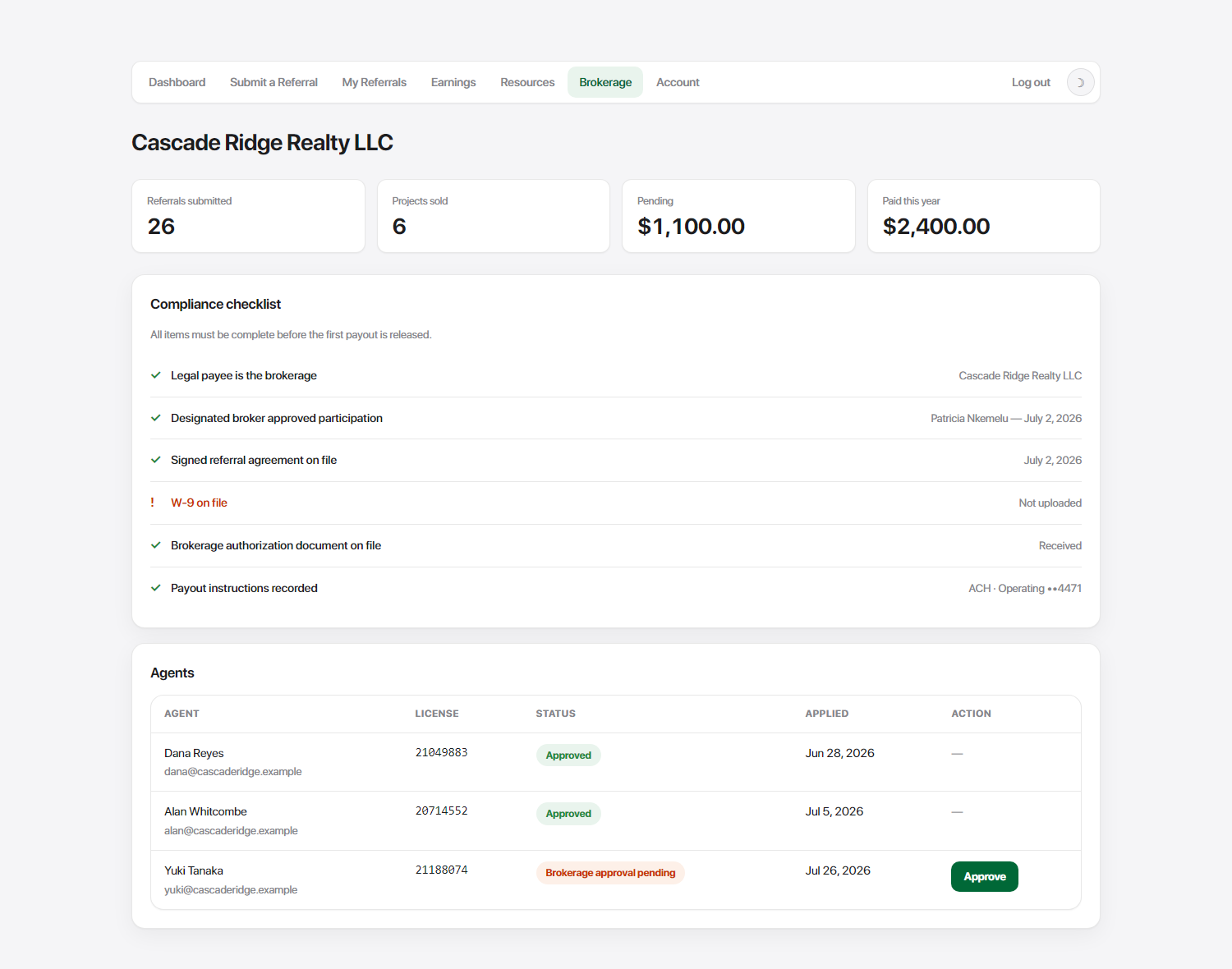
One person applies on behalf of the agent and the firm. We collect the agent’s licence details and the brokerage’s legal information, then confirm participation with the designated broker.
Before the account goes live, three things need to be on file for the firm: a signed referral agreement, a W-9, and a brokerage authorization confirming the designated broker approves participation.
If several agents from the same office join, they share one brokerage record. Each agent still gets their own login, their own referral link and their own view of the leads they submitted.
Why the brokerage and not you personally? Washington routes real-estate referral compensation through the firm. Everguard pays your brokerage; your brokerage handles any split owed to you under its own policy. It keeps everyone clean.
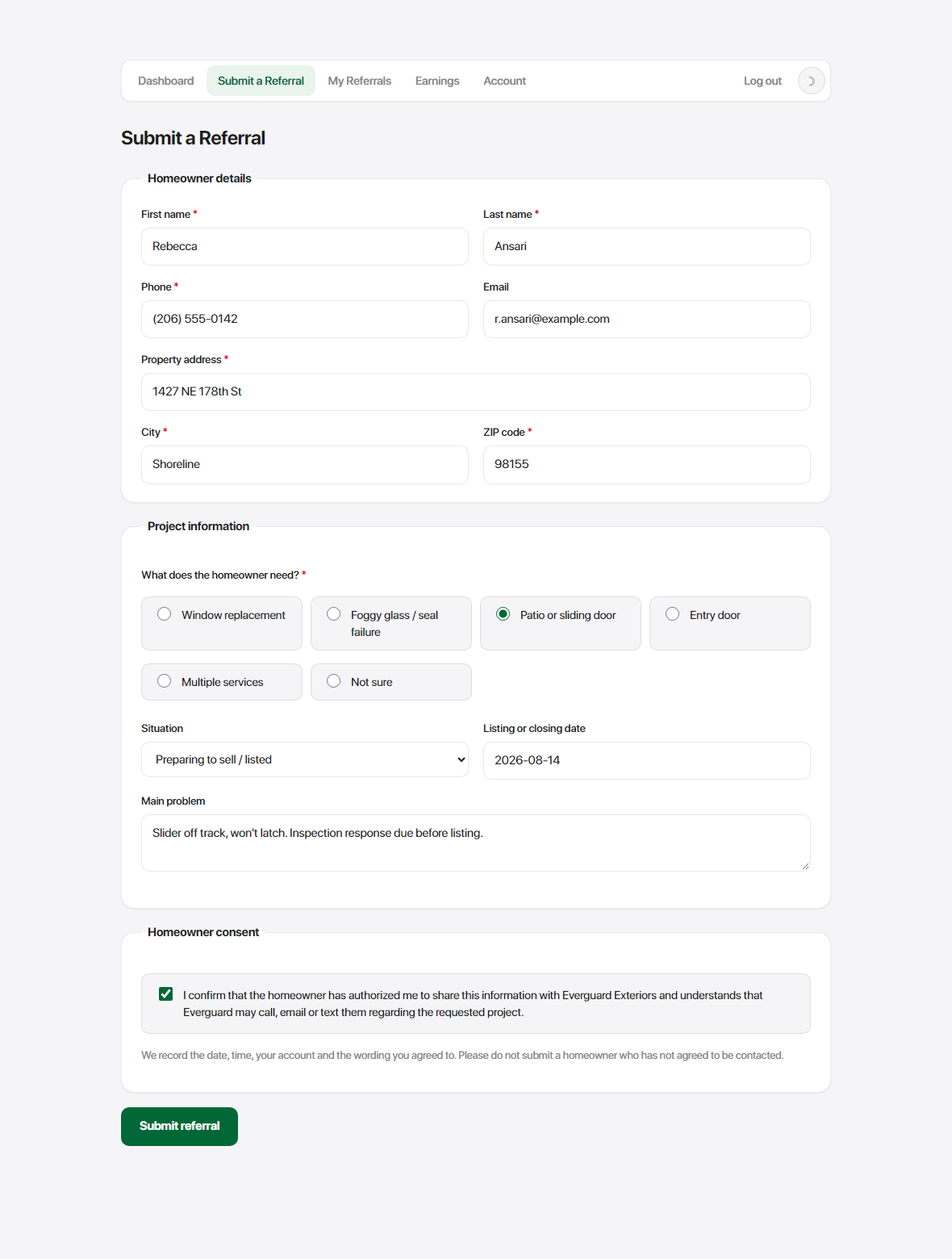
From your dashboard, or from your personal referral link on your phone. The form asks for the homeowner’s name, phone and email; the property address; what kind of work they need and roughly how much; whether they are selling, just bought, or simply own the home; their timeline and any listing or closing date that matters; and photographs if you have them.
The last box is the important one: you confirm that the homeowner authorized you to share their information and understands Everguard may call, email or text them about the project. We record the date, the wording you agreed to and your account against every submission.
Two minutes, honestly. Name, phone, address, what is wrong, consent. Everything else is optional and helps us prepare, but nothing else is required.
Every submission runs through an eligibility screen: is the property in our service area, is the phone number usable and the address complete, is the project something we actually do, and is this homeowner already in our system or already someone else’s referral?
If it clears, the referral is accepted and attributed to your brokerage account, and we reach out to the homeowner directly. If it does not, you get a plain-language reason on the referral page, not silence.
The duplicate rule. The first complete and valid referral we receive gets attribution. We check by phone number, email address and property address. If a homeowner was already in our system before your submission, or another partner submitted them first, we will tell you which situation applied.
Your dashboard shows a dated timeline for each referral: Submitted, Accepted, Contacted, Appointment Set, Appointment Confirmed, Estimate Completed, Follow-Up, Project Sold, Project Completed, Payout Pending, Paid.
You will get an email at the moments that matter — accepted, contacted, appointment set, estimate completed, sold, installed, and when compensation is approved and paid. You will not get an email every time someone updates an internal note.
What you will not see: our internal sales notes, the homeowner’s financing decisions, our margin, and any sensitive customer communication. You get progress and dates; the customer keeps their privacy.
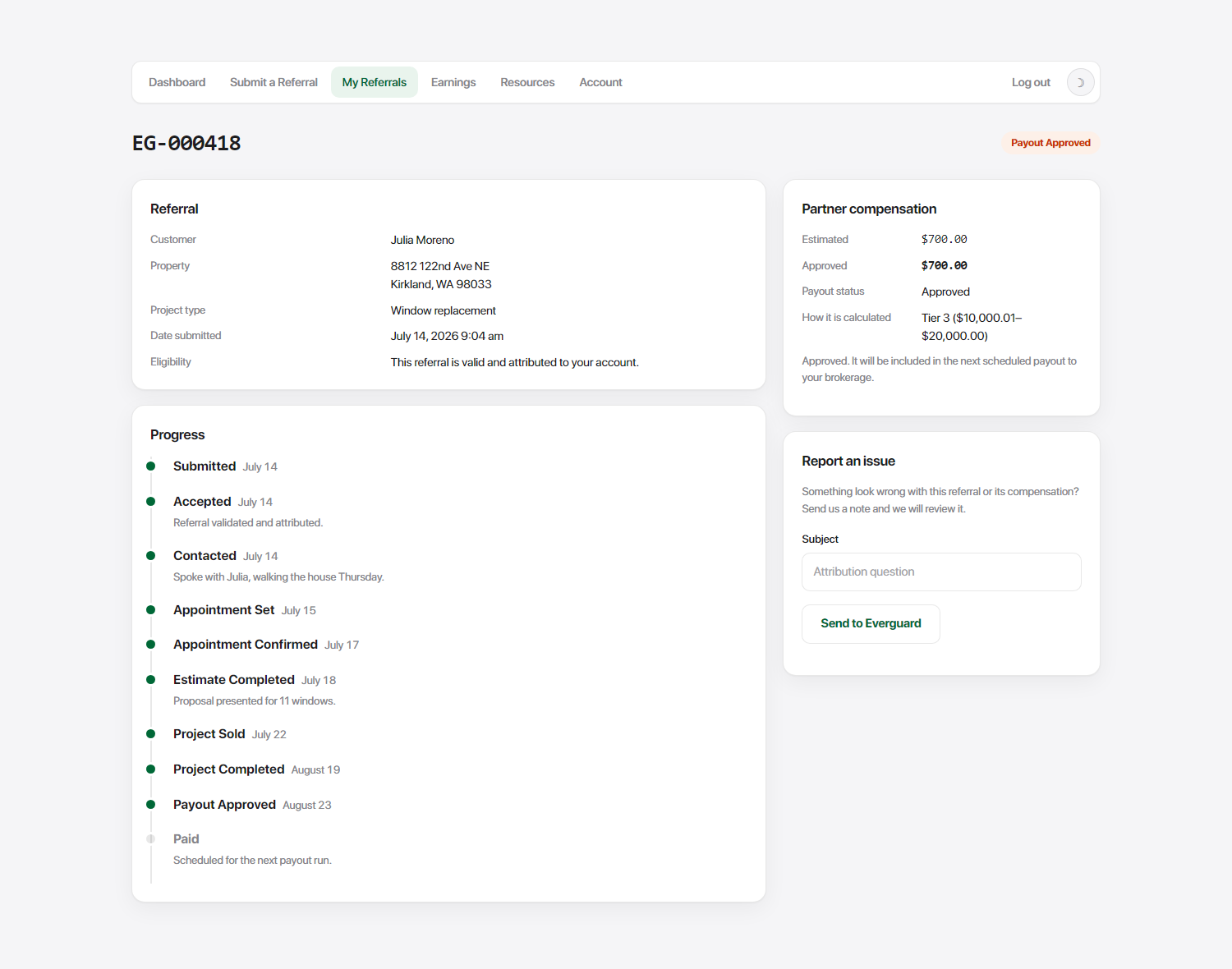
Compensation is earned after the referred project is installed and Everguard has collected the required customer payment. Both conditions, not one.
That is deliberate. It means we never promise you money on a contract that gets cancelled, a financing approval that falls through, or a balance we never collect. When your dashboard shows an approved amount, it is real.
| Collected project value | Partner compensation |
|---|---|
| Under $5,000.00 | $200.00 |
| $5,000.00–$10,000.00 | $400.00 |
| $10,000.01–$20,000.00 | $700.00 |
| Over $20,000.00 | $1,200.00 |
Compensation is earned after the referred project is installed and Everguard has collected the required customer payment. It is paid to the partner’s brokerage.
Approved compensation is grouped by brokerage and released on a published schedule. Balances below the payout minimum carry forward to the next run. Payment goes to the firm, by the method your brokerage administrator set up — normally ACH.
If a project is cancelled, refunded, charged back or otherwise made ineligible after the fact, the associated compensation is reversed. If it had already been paid, we will work it out with your brokerage’s accounting contact rather than surprising anyone.
No. The consent box is not a formality — we record the wording, the timestamp and your account against every submission. Ask the homeowner first, then submit.
Then they are already in our system and the referral will come back as a duplicate. That is not a knock on you; it just means attribution went to the earlier record. You will see exactly which case applied.
First complete and valid submission wins. We check phone, email and property address.
For the attribution period set in the program terms. After that window closes, an old submission no longer blocks a new one.
No. There is no obligation on the homeowner, and no cost to them for the estimate. If they choose someone else, nothing happens to your account.
Your referral list shows initials and city for privacy. The full detail is on the individual referral page for the referrals on your account.
Every referral page has a “Report an issue” form. It opens a dispute, notifies us, and pauses the compensation record until we have reviewed it.
Compensation is paid to your brokerage, so any information return goes to the firm, not to you. Your brokerage handles what it owes you and reports it accordingly. Talk to your broker about how they treat it.
Yes. The firm joins once; each agent gets their own account under it.